
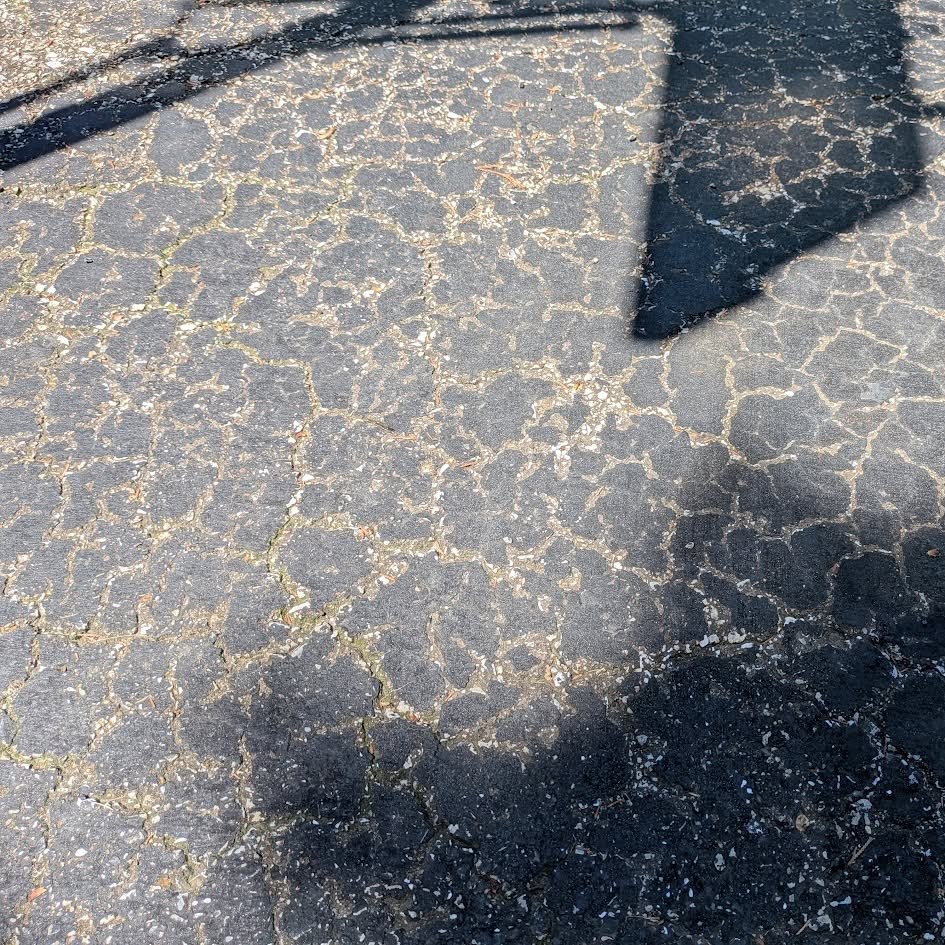
Take a look at this recent photo! Does your asphalt driveway or parking pad look like this network of scales? That’s called alligator cracking, and it’s a clear cry for help from your pavement! 🐊🚗
This pattern of small, interconnected cracks is one of the most serious types of asphalt damage. It's also known as "fatigue cracking" because it means the asphalt surface can no longer handle the load being placed on it. Why is it happening?
🚫 Weakened Base Layer: Alligator cracking usually starts because the supportive base layer under the asphalt has failed. This could be due to soil settling, poor initial construction, or excessive water saturating the foundation.
💧 The Water Hazard: Once those cracks appear, water readily seeps down and compromises the base even further. In Maryland, our freeze-thaw cycles turn this into a rapid destructive force!
⚖️ Heavy Traffic: Sometimes, pavement designed for light vehicles is subjected to overweight loads (like delivery or garbage trucks), accelerating fatigue.
The bad news? This isn't something you can fix with a simple bottle of crack filler. 👎 Once alligator cracking spreads, it's a structural issue. Usually, the only long-term fix is total pavement reconstruction (replacing the base and the asphalt). 🏗️
Finding these issues early during a home inspection saves you from massive, unforeseen expenses down the road. Our job is to catch the problems hiding beneath the surface! 📝🏡
Buying a home with a tired-looking driveway and want to know its true condition? Let us take a detailed look so you know exactly what you’re moving into!