
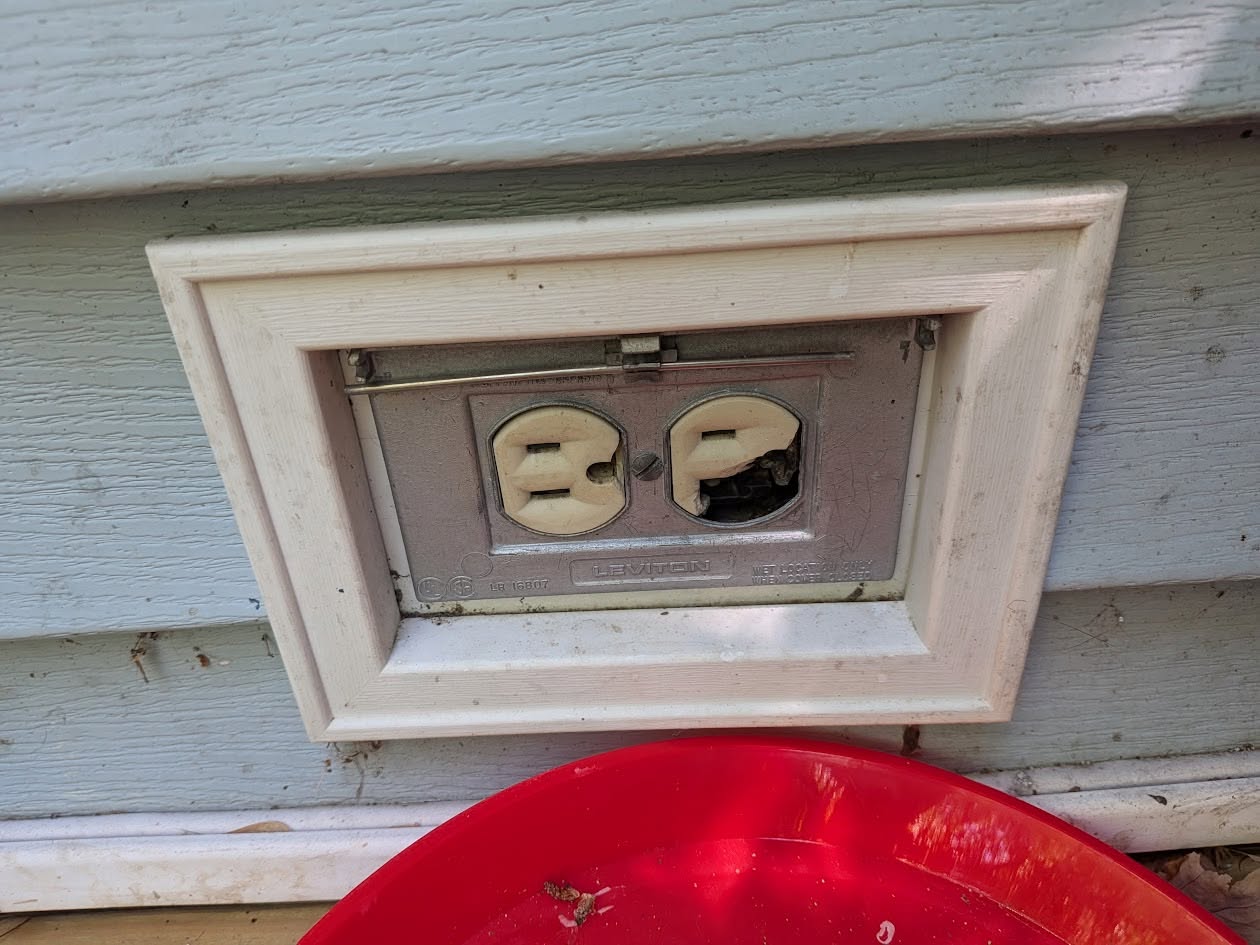
Take a look at this exterior outlet from a recent home inspection! Not only is the faceplate cracked, but a whole piece of the plastic housing has broken away, exposing the internal electrical contacts right to the elements! ⚡⚠️
Outdoor outlets are built to handle weather, but once the physical structure or cover fails, an ordinary receptacle becomes a major hazard:
⚡ Direct Shock Hazard: Exposed internal metal components mean anyone plugging something in or touching the faceplate risks a dangerous electrical shock.
🌧️ Water & Corrosion: Rain, snow, and humidity can seep directly into the live electrical box, causing short circuits, tripped breakers, or dangerous arcing behind the wall.
🔥 Fire Risk: Moisture combined with debris accumulation inside a damaged receptacle creates a genuine electrical fire hazard.
🔌 GFCI & Weatherproof Upgrades: Exterior outlets should be protected by a functional GFCI (Ground Fault Circuit Interrupter) and covered by a proper "while-in-use" weatherproof box to stay safe year-round.
Plugging yard tools or outdoor lights into a compromised outlet like this is a disaster waiting to happen. Replacing a damaged receptacle is a quick fix for a licensed electrician, but finding it before someone gets hurt is what matters! 🛠️
Catching electrical issues and outdoor safety hazards is why a thorough home inspection is so essential! 📝🏡
Buying a home? Let us take a detailed look for you!